

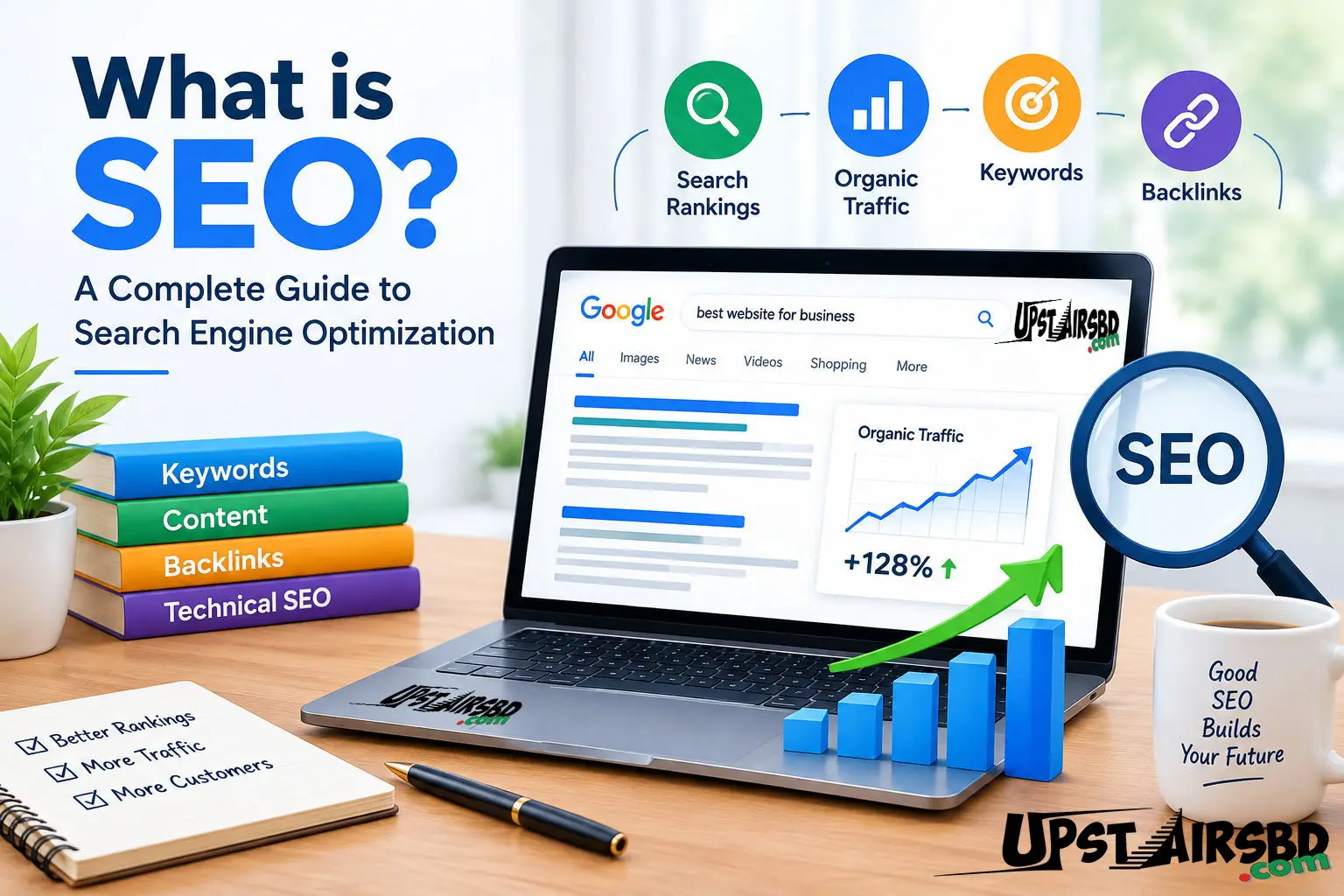
Search Engine Optimization (SEO) is an important part of building a successful online presence. Whether you run a small business, an e-commerce store, a personal blog, or a professional website, SEO can help your website become easier to discover through search engines.
A well-optimized website can attract relevant visitors, build trust with potential customers, and create more opportunities for leads and sales. However, SEO is more than simply adding keywords to a webpage. It involves improving your content, website structure, technical performance, user experience, and overall online presence.
In this guide, you’ll learn what SEO is, why it matters, the main areas of SEO, how to get started, and how businesses can use search optimization to grow online.
What Is SEO?
SEO stands for Search Engine Optimization. It is the process of improving a website and its content so that search engines can better understand, discover, and rank its pages for relevant searches.
Search engines consider many signals when determining which pages are useful for a particular search. These can include the relevance and quality of the content, website structure, page experience, links, and other technical factors.
For example, if you have a website development business and publish a helpful article about building a WordPress website, effective SEO can help that article reach people who are searching for information about WordPress websites.
The goal is not simply to get more visitors. The goal is to attract the right visitors who are genuinely interested in your content, products, or services.
Why Is SEO Important?
SEO can play an important role in long-term digital marketing because people often use search engines when they need information, products, or services.
Here are some of the main benefits of SEO.
1. Increase Relevant Website Traffic
Better visibility in search results can help more potential customers discover your website.
Unlike traffic from some paid advertising campaigns, organic search traffic can continue to reach useful content after the initial work has been completed.
2. Build Trust and Credibility
A professional website with helpful, accurate, and well-organized content can create a stronger impression on visitors.
Consistently publishing useful information can also help demonstrate your knowledge and experience in your industry.
3. Improve User Experience
Good SEO often goes hand in hand with a better website experience.
Clear navigation, readable content, fast-loading pages, mobile-friendly design, descriptive headings, and useful internal links can make it easier for visitors to find what they need.
4. Generate Leads and Sales
SEO can bring people to your website at the moment they are looking for a solution.
For example, someone searching for professional website development may already have a business need. A useful service page can then guide that visitor toward contacting your business.
5. Support Long-Term Online Growth
SEO is not normally a one-time task. Search behavior, competitors, websites, and search technology continue to change.
A consistent optimization strategy can help your website remain useful, technically healthy, and competitive over time.
The Main Types of SEO
SEO includes several areas that work together. Focusing on only one area may not be enough for a competitive website.
On-Page SEO
On-page SEO focuses on the content and elements visitors can find on individual webpages.
It can include:
- Relevant keyword research
- Page titles
- Meta descriptions
- Headings
- Helpful and original content
- Internal linking
- Image optimization
- Readable page structure
- Search intent
- Clear calls to action
The goal is to make each page useful for both visitors and search engines.
Technical SEO
Technical SEO focuses on the technical foundation of a website.
Important areas can include:
- Mobile-friendly design
- Website speed and performance
- Crawlability
- Indexability
- Site architecture
- XML sitemaps
- Canonical URLs
- Secure HTTPS connections
- Broken links and technical errors
- Structured data where appropriate
A technically sound website makes it easier for search engines to access and understand your content.
Off-Page SEO
Off-page SEO involves activities that help establish your website’s reputation and authority outside your own website.
One important area is earning relevant, high-quality backlinks from other websites.
However, the goal should not be to collect as many links as possible. Links should come naturally from useful content, legitimate relationships, digital PR, industry resources, or other appropriate activities.
Local SEO
Local SEO helps businesses become more visible when people search for products or services in a particular geographic area.
For businesses serving specific locations, local optimization can include accurate business information, location-focused content, relevant local pages, and maintaining a strong presence in appropriate local search features.
E-commerce SEO
E-commerce SEO focuses on helping product and category pages become easier to discover through search.
It can involve:
- Product page optimization
- Category structure
- Product descriptions
- Internal linking
- Image optimization
- Technical SEO
- Search-friendly navigation
- Helpful buying information
For an online store, strong SEO can help potential customers discover products without relying entirely on paid advertising.
How to Get Started With SEO
If you’re new to SEO, you don’t need to change everything at once. Start with the fundamentals and improve your website step by step.
1. Audit Your Website
Begin by checking the current condition of your website.
Look for problems such as broken links, slow pages, poor mobile usability, missing or duplicated page information, indexing issues, and weak content.
2. Understand Your Audience
Think about the questions your potential customers ask before buying your product or hiring your service.
Understanding your audience helps you create content that addresses real problems instead of writing only for search engines.
3. Research Relevant Keywords
Keyword research helps you discover the words and phrases people use when searching for information, products, or services.
Choose keywords based on relevance, search intent, competition, and the type of audience you want to attract.
Avoid forcing keywords into every sentence. They should fit naturally within useful content.
4. Create Helpful Content
Create content that answers questions clearly and provides information your audience can actually use.
Instead of producing many similar articles, focus on creating fewer, stronger resources that genuinely help readers.
5. Improve Your Website Structure
Use descriptive page titles, logical headings, useful internal links, clear navigation, and a sensible URL structure.
Your most important service and business pages should also be easy for visitors and search engines to discover.
6. Monitor Your Performance
SEO requires ongoing measurement.
Tools such as Google Search Console and analytics platforms can help you understand search visibility, clicks, impressions, indexing issues, and user behavior.
Use this information to identify opportunities and improve your strategy over time.
Common SEO Mistakes to Avoid
Many website owners make SEO more complicated than it needs to be. Avoid these common mistakes:
Keyword Stuffing
Repeating the same keyword excessively can make content difficult to read and may create a poor experience for visitors.
Use relevant terms naturally and focus on answering the searcher’s question.
Publishing Thin or Unhelpful Content
Creating large amounts of low-value content simply to target keywords is unlikely to build strong long-term visibility.
Every article should have a clear purpose and provide genuine value.
Ignoring Technical SEO
Even excellent content can struggle if important pages cannot be crawled or indexed properly.
Regularly check your website for technical problems.
Forgetting Mobile Users
Many people access websites from smartphones. Your website should therefore provide a good experience across different screen sizes.
Expecting Immediate Results
SEO usually takes time. Results depend on factors such as competition, website quality, content, authority, technical health, and the search queries being targeted.
Be patient and focus on consistent improvement rather than chasing instant rankings.
SEO and Modern Search
Search is changing. People increasingly use conversational queries and expect search engines to provide direct, useful answers.
That makes it even more important to create content that clearly answers real questions.
For businesses, this means focusing on:
- Helpful and original information
- Clear answers to common customer questions
- Strong website structure
- Natural language
- Relevant internal linking
- Accurate and trustworthy information
- Good user experience
- Strong technical foundations
Optimizing for modern search does not mean creating separate content for every search technology. Strong fundamentals remain important.
How Long Does SEO Take?
There is no universal timeline for SEO.
A new website in a competitive industry may need considerable time to establish visibility, while an established website with strong content and authority may see improvements sooner.
Results can depend on:
- Website age and authority
- Industry competition
- Current technical condition
- Content quality
- Target keywords
- Search intent
- Backlink profile
- Consistency of optimization
Instead of expecting a guaranteed ranking by a particular date, businesses should monitor meaningful progress such as improved visibility, relevant organic traffic, engagement, leads, and conversions.
When Should You Hire an SEO Service?
You may benefit from professional SEO support if you:
- Have a business website but receive little organic traffic
- Don’t know which keywords to target
- Have technical SEO problems
- Want to improve existing content
- Are launching a new website
- Run an e-commerce store
- Want to attract customers from specific locations
- Don’t have enough time to manage SEO yourself
Professional SEO support can help you identify opportunities, prioritize improvements, and create a more organized search strategy.
Why Choose UpstairsBD for SEO Services?
At UpstairsBD, we help businesses build stronger online foundations through website development, SEO, e-commerce solutions, and other digital services.
Our SEO approach can include keyword research, on-page optimization, technical improvements, content-focused strategies, internal linking, and other relevant optimization activities based on a website’s needs.
We understand that every website is different. Therefore, SEO should begin with understanding your business, audience, competitors, and goals rather than applying the same strategy to every website.
Whether you’re building a new website or trying to improve an existing one, our goal is to create a practical SEO strategy that supports sustainable online growth.
Want to improve your website’s search visibility? Explore our SEO Services to learn more.
Frequently Asked Questions About SEO
What does SEO stand for?
SEO stands for Search Engine Optimization. It is the process of improving websites and their content to increase their visibility for relevant searches.
Is SEO only about keywords?
No. Keywords are only one part of SEO. Effective SEO can also involve content quality, technical performance, website structure, internal linking, user experience, and other factors.
Is SEO useful for small businesses?
Yes. Small businesses can use SEO to reach people who are actively searching for their products or services. A focused strategy can help a smaller website compete for relevant searches.
Can SEO help an e-commerce website?
Yes. E-commerce SEO can improve the visibility of product pages, category pages, and useful shopping content, helping potential customers discover an online store through search.
Can SEO guarantee the number-one position on Google?
No reputable SEO provider should guarantee a specific Google ranking. Search results depend on many factors and can change over time.
Is SEO a one-time task?
SEO is best treated as an ongoing process. Websites, competitors, search behavior, and search technology change, so continued monitoring and improvement are important.
Conclusion
SEO is more than trying to rank higher on Google. It is about creating a website that is useful, accessible, technically sound, and relevant to the people you want to reach.
From keyword research and content optimization to technical SEO, internal linking, and user experience, each part can contribute to a stronger online presence.
If you are serious about growing your website through organic search, start with a clear strategy, create genuinely useful content, fix technical problems, and measure your progress consistently.
And if you need professional help, UpstairsBD can help you develop and improve an SEO strategy that fits your website and business goals.
Ready to take the next step? Explore our SEO Services or contact UpstairsBD to discuss your website’s needs.
This information is really very helpful.